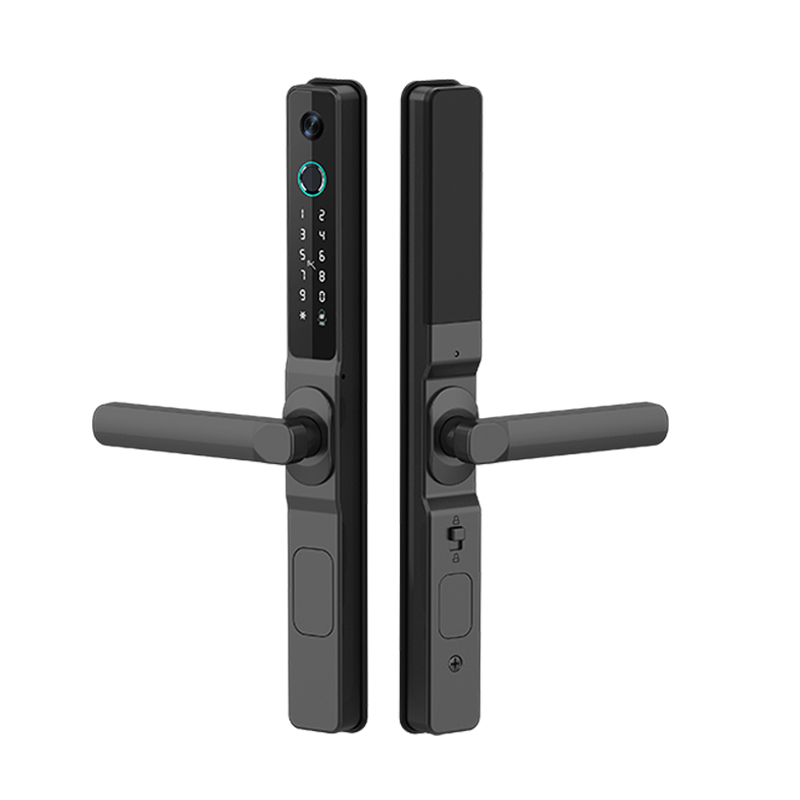
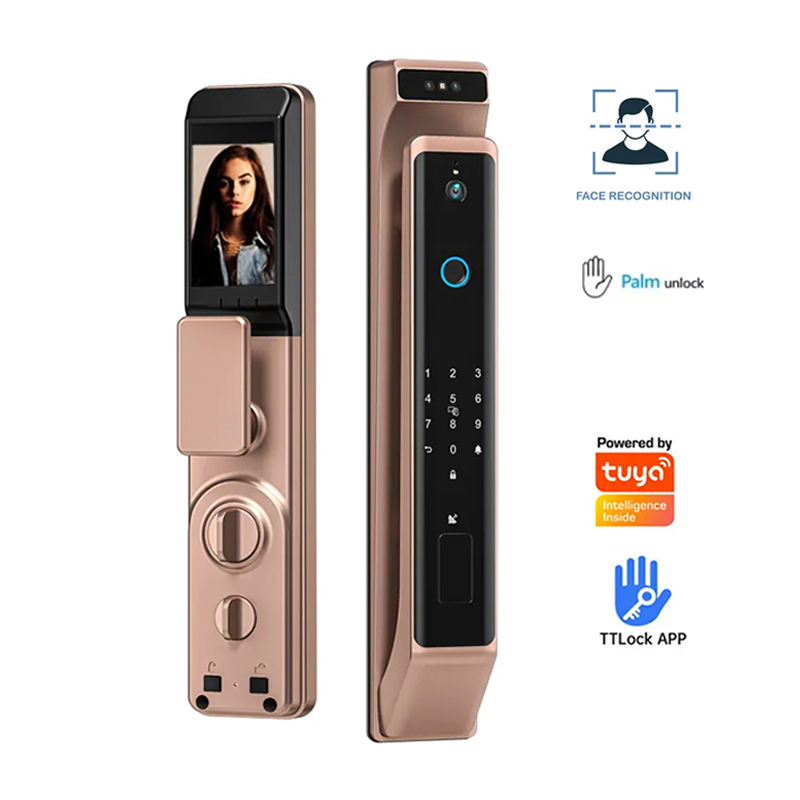
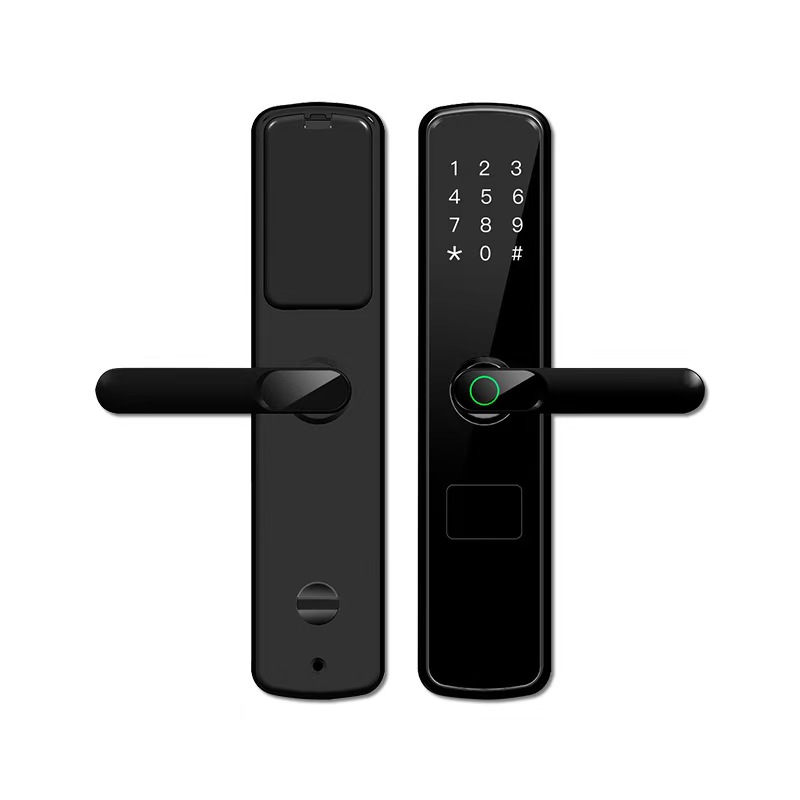
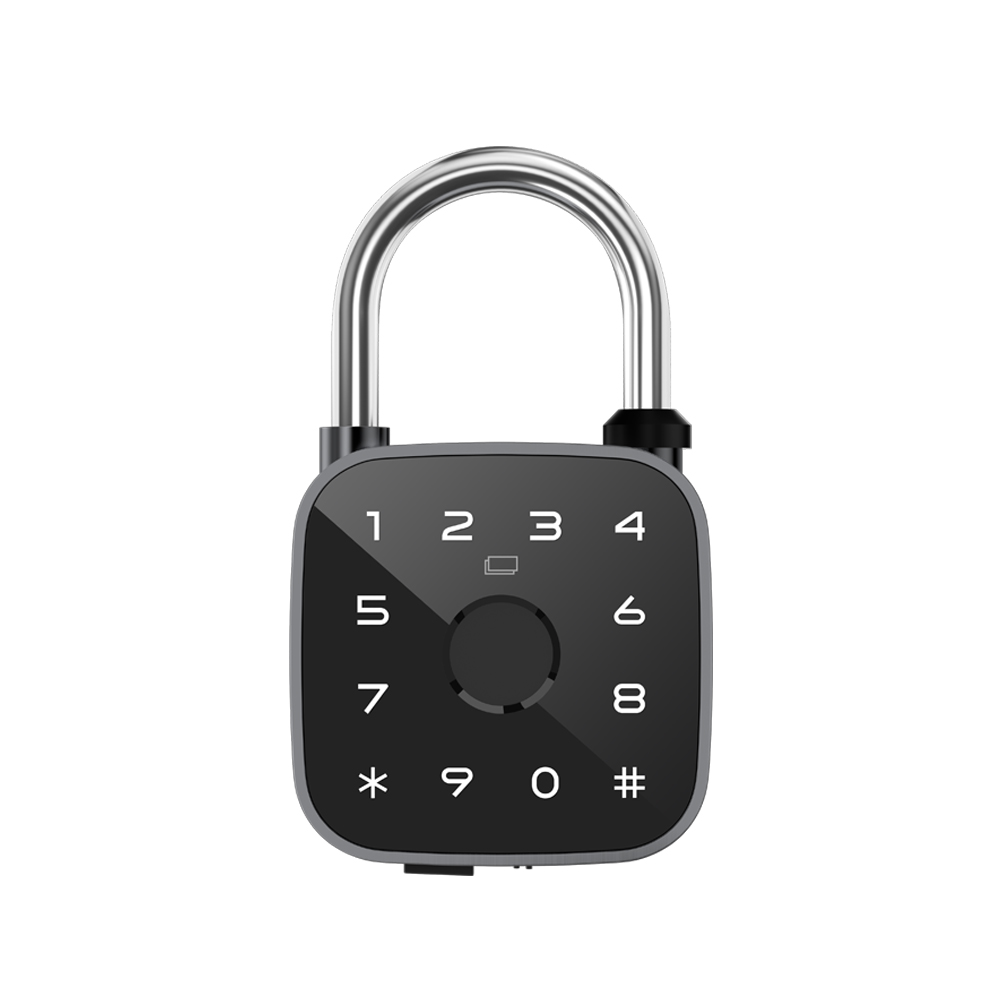
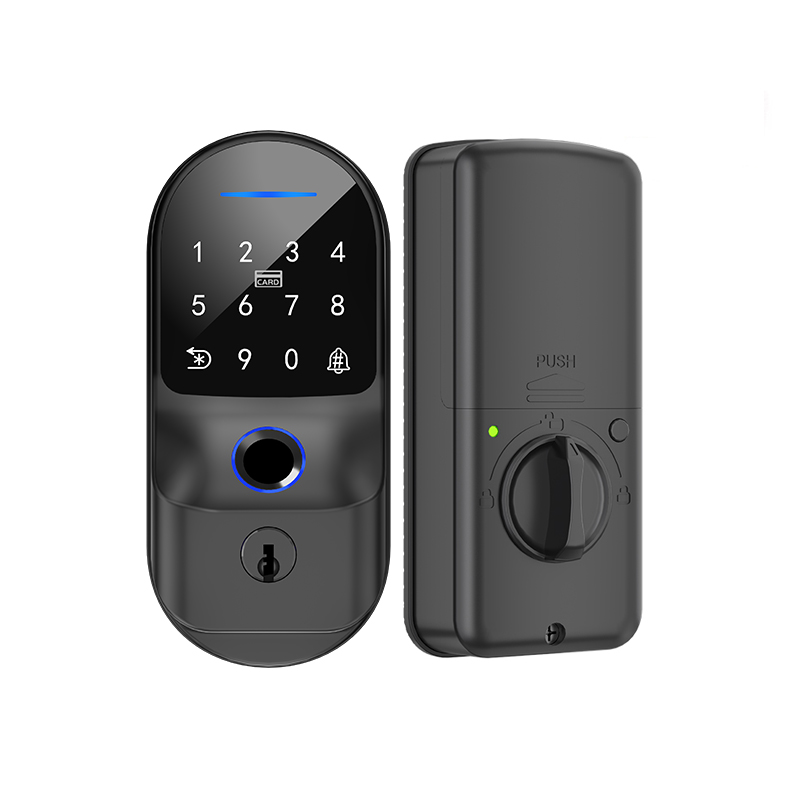
Choosing the right hotel lock supplier is an important decision for hotel owners, developers, contractors, distributors, wholesalers, and procurement teams. Hotel door locks are not simply hardware products. They are part of a hotel’s security, guest experience, access management, and daily operations.
With many suppliers offering RFID hotel locks, Bluetooth hotel locks, electronic door locks, and smart hotel locking systems, it can be difficult to know which supplier is the right choice.
The lowest price is not always the best option. Buyers should consider product quality, technology, door compatibility, software, certifications, customization, delivery, warranty, and long-term technical support.
So, how do you choose the right hotel lock supplier?
This guide explains the most important factors to consider before selecting a hotel door lock supplier for a new hotel, renovation project, wholesale business, or hotel group.
What Is a Hotel Lock Supplier?
A hotel lock supplier provides electronic or smart door locking products designed for hotels, resorts, apartments, and other accommodation properties.
Depending on the supplier, products may include:
- RFID hotel door locks
- Bluetooth hotel locks
- Smart hotel door locks
- Electronic hotel locks
- Key card hotel locks
- Fingerprint hotel locks
- Password hotel locks
- Mobile APP hotel locks
- Hotel lock management software
- Hotel gateways and access control devices
It is important to distinguish between a hotel lock manufacturer and a trading company. A direct manufacturer normally has greater control over production, quality, customization, spare parts, and technical support.
However, manufacturing capability alone is not enough. Buyers should also evaluate the supplier’s product quality, technology, international experience, certifications, service, and ability to support long-term projects.
1. Check Whether the Supplier Is a Manufacturer
One of the first questions to ask is:
Is the hotel lock supplier a direct manufacturer or a trading company?
Working directly with a manufacturer can provide advantages such as:
- More competitive B2B pricing
- Better production control
- OEM and ODM support
- Product customization
- More consistent quality
- Faster technical communication
- Spare-parts availability
- Better support for large projects
Ask potential suppliers about their factory, production experience, product range, OEM capability, production lead time, and experience with international hotel projects.
For hotel distributors and wholesalers, a stable manufacturer can also provide more reliable long-term supply.
2. Choose the Right Hotel Lock Technology
The best hotel lock supplier should offer technology that matches your hotel’s actual requirements.
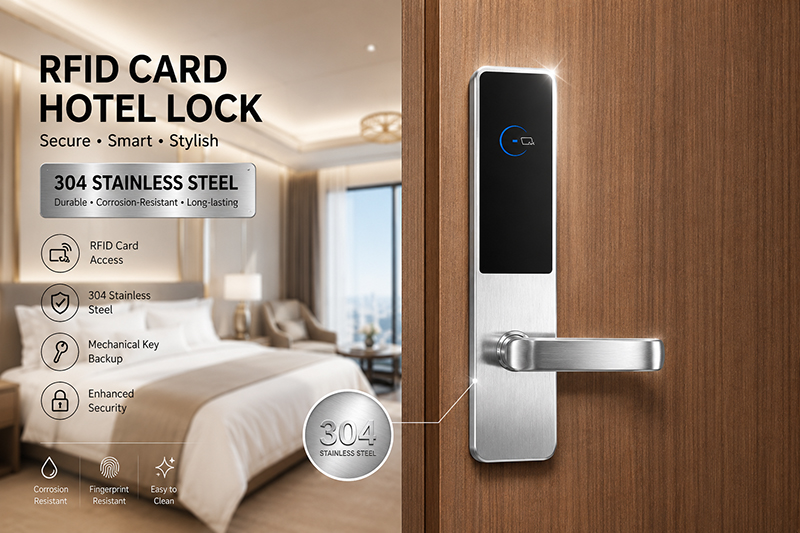
RFID Hotel Locks
RFID hotel locks remain a popular solution for hotels because key cards are easy for guests to use and simple for front-desk staff to manage.
A typical RFID hotel lock system may support:
- RFID guest cards
- Master cards
- Emergency cards
- Access management
- Low-battery alerts
- Mechanical key override
RFID hotel locks are suitable for many traditional hotels, economy hotels, business hotels, resorts, and renovation projects.
Bluetooth Hotel Locks
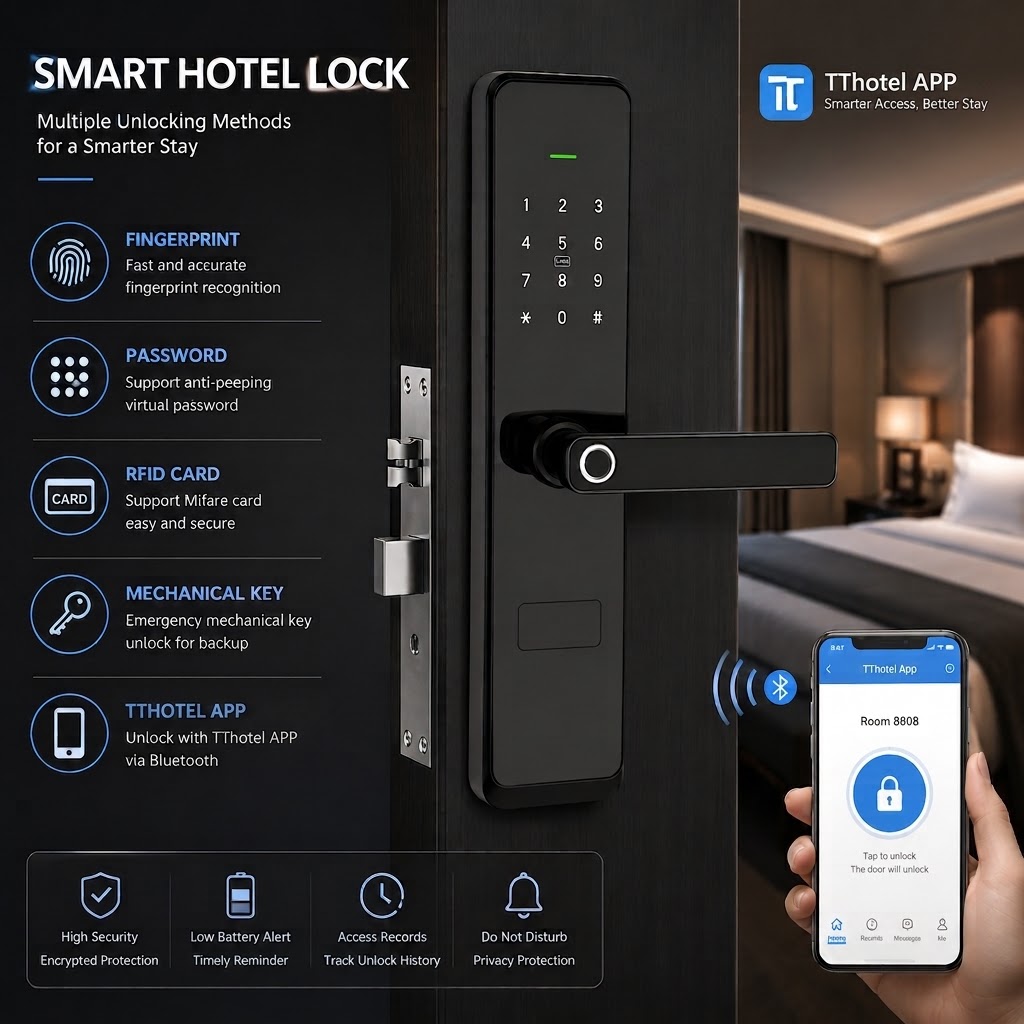
Bluetooth hotel locks allow guests to use a smartphone instead of a traditional key card.
Depending on the system, guests can unlock their room through a mobile APP using Bluetooth.
Bluetooth hotel locks can be suitable for:
- Smart hotels
- Boutique hotels
- Modern hotel projects
- Hotel apartments
- Digital check-in systems
- Properties looking for mobile access
Some Bluetooth hotel systems can also support optional gateways for remote management and online functions.
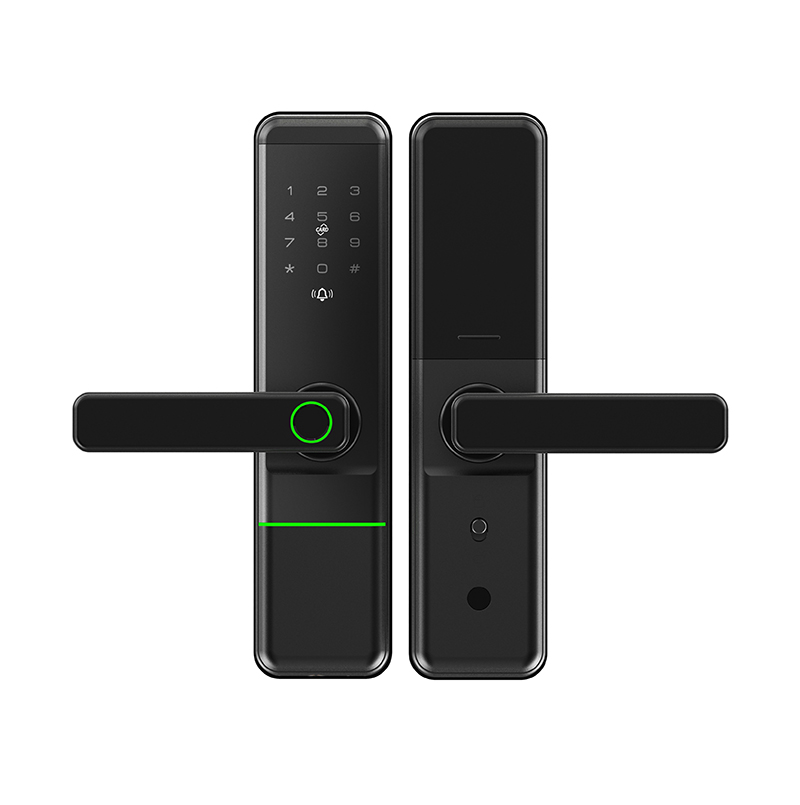
Fingerprint and Password Hotel Locks
Fingerprint and password access can provide additional flexibility for hotel apartments, private suites, staff rooms, and smaller accommodation properties.
The important point is not to choose the most advanced technology simply because it is available. Choose the technology that matches the hotel’s operating model, guest requirements, and budget.
3. Evaluate the Complete Hotel Lock System
A common mistake is to compare hotel locks based only on the hardware price.
A complete hotel locking solution may include:
Hotel door lock + access credentials + management software + mobile APP + optional gateway
For example, an RFID hotel lock system may include:
- Hotel management software
- RFID card encoder
- RFID cards
- Hotel door locks
- Master cards
- Emergency cards
A Bluetooth hotel lock system may include:
- Hotel management software
- Mobile APP
- Bluetooth-enabled locks
- Digital guest keys
- Optional gateway
When comparing hotel lock suppliers, evaluate the complete solution and total project cost, not just the unit price of the lock.
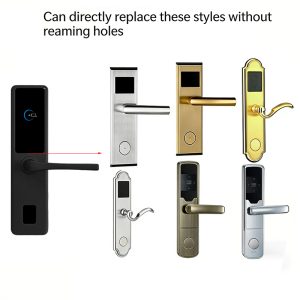
4. Check Door and Lock Body Compatibility
Hotel doors can have very different structures. Before ordering, make sure the hotel lock is compatible with the existing or planned doors.
Important specifications include:
- Door thickness
- Backset
- Center distance
- Mortise dimensions
- Lock body type
- Door opening direction
- Installation method
- Existing door preparation
This is particularly important for hotel renovation projects.
If the new hotel lock can directly replace the existing lock with minimal door modification, installation can be faster and project costs can be reduced.
Before placing an order, ask the supplier:
Can this hotel lock fit our existing doors and lock bodies without major modifications?
A professional supplier should be able to provide detailed installation drawings and technical specifications.
5. Evaluate Materials and Durability
Hotel room locks may be used many times every day, so material and construction quality are important.
Common materials include:
- Stainless steel
- Zinc alloy
- Aluminum alloy
- Engineering plastics
The right material depends on the product design, hotel environment, price target, and application.
For hotels in humid, tropical, or coastal environments, buyers should pay particular attention to corrosion resistance and surface treatment.
Do not evaluate a lock only by its material name. Ask about:
- Material grade
- Surface treatment
- Corrosion resistance
- Mechanical durability
- Production quality
- Environmental suitability
For high-use hotel applications, reliable construction can help reduce maintenance and replacement costs over the long term.
6. Check Security and Emergency Access
Hotel locks need to provide both security and operational convenience.
Depending on the system, useful functions may include:
- Guest cards
- Master cards
- Emergency cards
- Mechanical key override
- Anti-tamper design
- Access records
- Low-battery warning
- Automatic locking
A mechanical key override can be particularly useful as an emergency backup. Even when a hotel primarily uses RFID cards or Bluetooth APP access, an authorized mechanical opening method can provide additional flexibility when electronic access is unavailable.
Hotel operators should consider emergency access during the initial system design rather than treating it as an afterthought.
7. Evaluate Hotel Lock Software and APP Functions
For modern hotel projects, software can be just as important as the physical door lock.
Before selecting a supplier, ask:
- Is hotel management software included?
- Is it easy for front-desk staff to use?
- Can rooms and users be managed efficiently?
- Can RFID cards be issued quickly?
- Does the system support mobile APP access?
- Can guests receive digital keys?
- Does it support Bluetooth?
- Is remote management available?
- Is a gateway required?
For Bluetooth hotel locks, it is also important to understand how the APP works and whether guests can easily connect their smartphones to the lock.
The best system is not necessarily the one with the most features. It is the one that provides the functions the hotel actually needs without creating unnecessary operational complexity.
8. Check Certifications and Quality Control
For international hotel projects, buyers should ask suppliers for relevant certifications and testing documents.
Depending on the product and destination market, these may include:
- CE
- FCC
- RoHS
- EMC testing
- Battery-related certifications
- Material documentation
- Quality inspection reports
Certification requirements vary by country, so buyers should confirm the specific requirements of their target market.
Quality-control procedures are equally important.
A professional hotel lock manufacturer should have processes such as:
Incoming Material Inspection → Production Inspection → Assembly Testing → Functional Testing → Final Inspection → Packaging
Good quality control helps reduce defective products, installation problems, and after-sales issues.
9. Compare Price, MOQ, and Total Cost
Price is important for every B2B buyer, but the lowest unit price does not always mean the lowest overall project cost.
Consider the complete cost, including:
- Hotel lock price
- Software
- APP fees
- RFID cards
- Card encoders
- Gateways
- Installation accessories
- Spare parts
- Shipping
- Technical support
- Warranty service
For example, one supplier may offer a lower lock price but charge additional software or system fees. Another supplier may have a slightly higher unit price but provide a more complete solution and better support.
For hotel projects, total cost of ownership is often more important than the initial purchase price.
10. Consider OEM and Customization
For hotel lock distributors, wholesalers, contractors, and hotel groups, customization may be an important requirement.
Depending on the manufacturer, customization may include:
- Company logo
- Product color
- Surface finish
- Packaging
- User manuals
- Installation instructions
- Software branding
- APP branding
- Lock body
- Product structure
Not every hotel lock supplier can provide genuine OEM or ODM services.
If customization is required, request samples and confirm all specifications before starting mass production.
11. Check Warranty and After-Sales Support
A hotel lock is a long-term product, so after-sales support should be part of the supplier evaluation.
Ask about:
- Warranty period
- Defective product replacement
- Spare parts
- Technical support
- Installation assistance
- Software updates
- APP support
- Long-term product availability
For large hotel projects, reliable technical communication can make a significant difference.
If installation or software problems occur, fast technical support can help reduce project delays and operational disruption.
12. Request Samples Before a Large Order
Product photos and specifications are not enough to evaluate a hotel lock supplier.
Before placing a large order, request samples and test the actual products.
Hardware
Check:
- Build quality
- Handle operation
- Locking mechanism
- Card-reading performance
- Battery compartment
- Emergency opening
- Surface finish
Installation
Check:
- Door compatibility
- Lock body dimensions
- Installation difficulty
- Screw and accessory quality
- Installation instructions
Software and APP
Check:
- Room management
- Card issuing
- User management
- Access permissions
- Bluetooth connection
- APP operation
Sample testing allows buyers to identify potential problems before mass production and installation.
13. Consider the Supplier’s Target Market Experience
Hotel projects in different regions can have different requirements.
Hotels in Africa, Southeast Asia, the Middle East, and other international markets may have different expectations regarding door structures, climate, installation, pricing, access technology, and software.
A supplier with experience in your target market may understand these practical requirements better.
If you are a hotel lock wholesaler or distributor, ask whether the supplier has worked with similar customers and hotel projects in your market.
Red Flags When Choosing a Hotel Lock Supplier
Buyers should be cautious if a supplier has one or more of the following problems:
Extremely Low Price
An unusually low price may indicate compromises in materials, components, testing, software, or after-sales service.
Unclear Specifications
A supplier should be able to provide clear technical information about the lock body, dimensions, material, battery, software, and installation.
No Sample Support
A supplier unwilling to provide samples makes it difficult to verify actual product quality.
Poor Communication
Slow or unclear communication can become a major problem during large hotel projects.
No Spare Parts
Hotel locks are long-term products. Spare parts should be available when needed.
No Technical Support
Software, APP, or installation problems can cause project delays if the supplier cannot provide technical assistance.
Hotel Lock Supplier Selection Checklist
Before selecting a supplier, use this checklist:
| Factor | What to Check |
|---|---|
| Manufacturer | Factory experience and production capability |
| Product | RFID, Bluetooth, fingerprint, password, etc. |
| Compatibility | Door thickness, mortise and lock body |
| Material | Stainless steel, zinc alloy, etc. |
| Security | Master cards, emergency access, mechanical override |
| Software | Hotel management functions |
| APP | Bluetooth/mobile access capability |
| Certification | Applicable market certifications |
| Quality | Production and final inspection |
| MOQ | Suitable for your project |
| OEM/ODM | Branding and customization |
| Warranty | Warranty and replacement policy |
| Spare Parts | Long-term availability |
| Support | Technical and installation support |
| Delivery | Production lead time |
| Experience | International hotel project experience |
What Is the Best Hotel Lock Supplier?
There is no single best hotel lock supplier for every hotel project.
The right supplier depends on your:
- Hotel type
- Number of rooms
- Budget
- Door structure
- Security requirements
- Access technology
- Software requirements
- Installation conditions
- Target market
- Long-term service requirements
For a traditional hotel renovation, an RFID hotel lock system may provide a good balance between reliability, simplicity, and cost.
For modern hotels that want smartphone-based access, a Bluetooth hotel lock system may be a better choice.
For hotel apartments or smaller properties, smart locks with APP, password, fingerprint, or multiple access methods may provide greater flexibility.
The key is to choose a supplier that can provide the right combination of quality, technology, compatibility, price, service, and long-term support.
Final Thoughts
Choosing the right hotel lock supplier should be based on more than product price or appearance.
Hotel owners, contractors, distributors, wholesalers, and procurement teams should evaluate the complete solution, including hardware quality, RFID or Bluetooth technology, lock-body compatibility, software, certifications, customization, delivery, spare parts, warranty, and technical support.
Before placing a large order, compare several suppliers, request samples, test the products, confirm technical specifications, and clarify warranty and after-sales policies.
The best hotel lock supplier is not necessarily the cheapest supplier. It is the supplier that can consistently provide reliable hotel door locks, suitable access technology, stable quality, professional technical support, and long-term value.