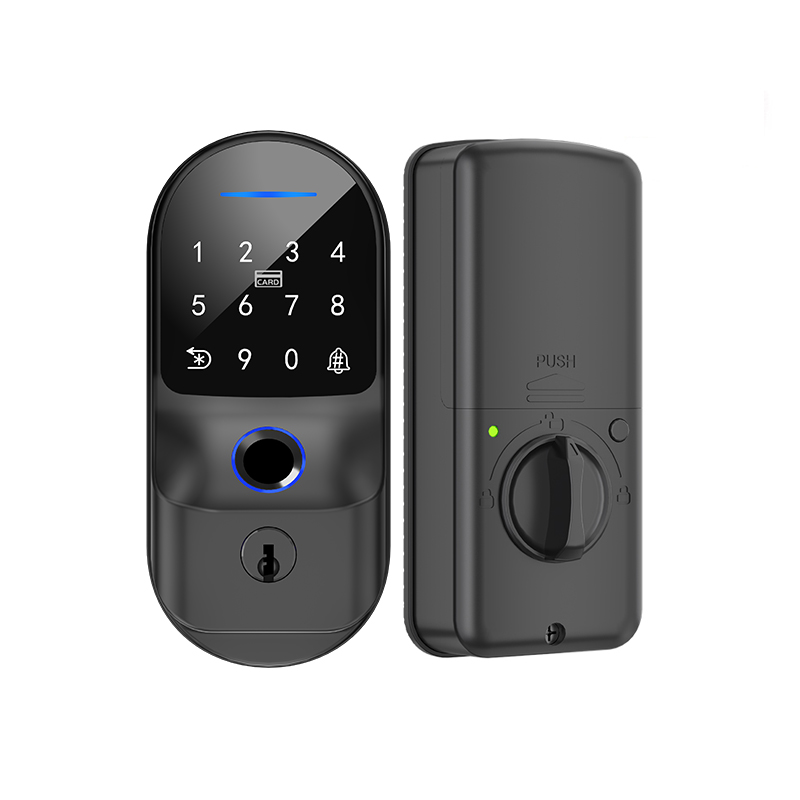
Installing hotel door locks is an important step in hotel construction, renovation, and access control projects. For hotel contractors, choosing the right lock involves more than comparing prices or selecting an attractive design. Door compatibility, lock body dimensions, access methods, installation costs, and long-term maintenance all affect project quality and profitability.
A suitable hotel door lock should fit the door structure, meet the hotel’s operating requirements, and provide reliable access for guests and staff.
Before purchasing or installing hotel door locks, contractors should check the following 10 factors to reduce installation problems, avoid unnecessary door modifications, and improve project efficiency.
1. Check Door Material and Structure
The first step is to confirm the type of door on which the hotel lock will be installed. Different door materials and structures may require different lock configurations.
Common applications include wooden doors, steel doors, metal doors, and existing hotel doors undergoing renovation.
Before selecting a lock, contractors should check:
- Door material and thickness
- Existing lock holes and mounting positions
- Door edge preparation
- Available installation space
- Whether the door has special structural or fire-rating requirements
For renovation projects, the existing door preparation is particularly important. If a replacement lock does not match the original installation holes, additional drilling, cutting, or carpentry work may be required.
These modifications increase labor costs and can damage the existing door finish.
Practical tip: Provide the hotel lock supplier with photos of the front and edge of the door, the existing lock, and the installation area. Include accurate measurements to help confirm compatibility before ordering.
2. Verify Lock Body Dimensions and Compatibility
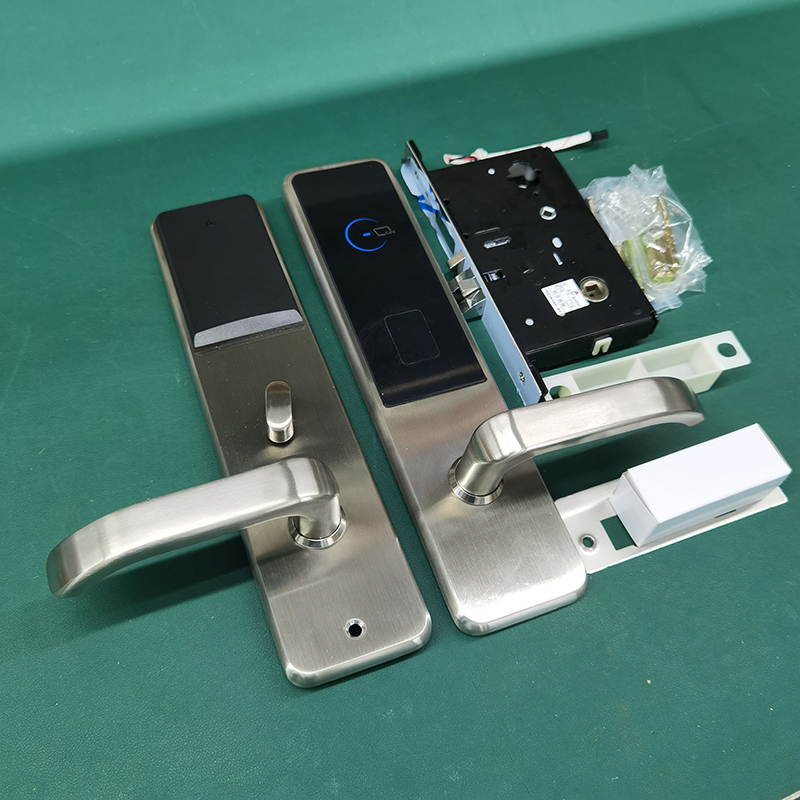
Lock body compatibility is one of the most important technical considerations before hotel door lock installation.
Two hotel locks may look similar from the outside but use different internal lock bodies and mounting dimensions. Choosing an incompatible model can result in installation delays and additional costs.
Contractors should confirm:
- Lock body type and dimensions
- Backset and center distance
- Handle and cylinder positions
- Mounting hole locations
- Compatibility between the lock body and exterior panels
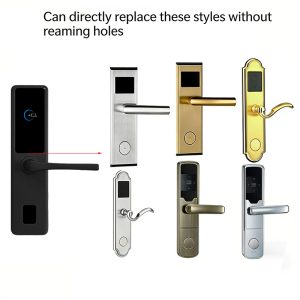
For example, if an existing hotel door uses an American-standard mortise lock body, replacing it with a lock designed for a different configuration may require changes to the door.
For new construction, lock specifications should be coordinated with the door supplier before production.
For hotel renovation projects, selecting a compatible replacement lock can reduce modifications, preserve the original door appearance, and simplify installation.
Do not rely on product photos alone. Request technical drawings and confirm the actual dimensions with the manufacturer.
3. Confirm Door Thickness and Opening Direction
Door thickness and opening direction are basic specifications that should be confirmed before bulk purchasing.
A lock designed for a specific thickness range may not fit correctly if the door is too thick or too thin. Incorrect handing can also affect handle operation and installation.
Check the following details:
- Actual door thickness
- Left-hand or right-hand opening
- Inward or outward opening
- Handle orientation
- Available mounting space
For projects involving many rooms, a small specification error can be repeated across dozens or hundreds of doors.
Contractors should also confirm whether the selected model supports reversible installation or requires a specific opening direction. Not every hotel lock offers automatic left-and-right recognition.
Best practice: Prepare a door schedule listing each door type, thickness, opening direction, and required lock configuration. Confirm it with the supplier before production or mass installation.
4. Choose the Right Access Method
The access method should match the hotel’s operating model, guest experience requirements, and project budget.
RFID Card Hotel Locks
RFID card hotel locks allow guests to unlock their rooms using access cards. They are widely suitable for economy hotels, business hotels, resorts, and other traditional hotel applications.
Before ordering, contractors should confirm card compatibility, card management requirements, and whether the lock works with the intended hotel management system.
Bluetooth Hotel Locks
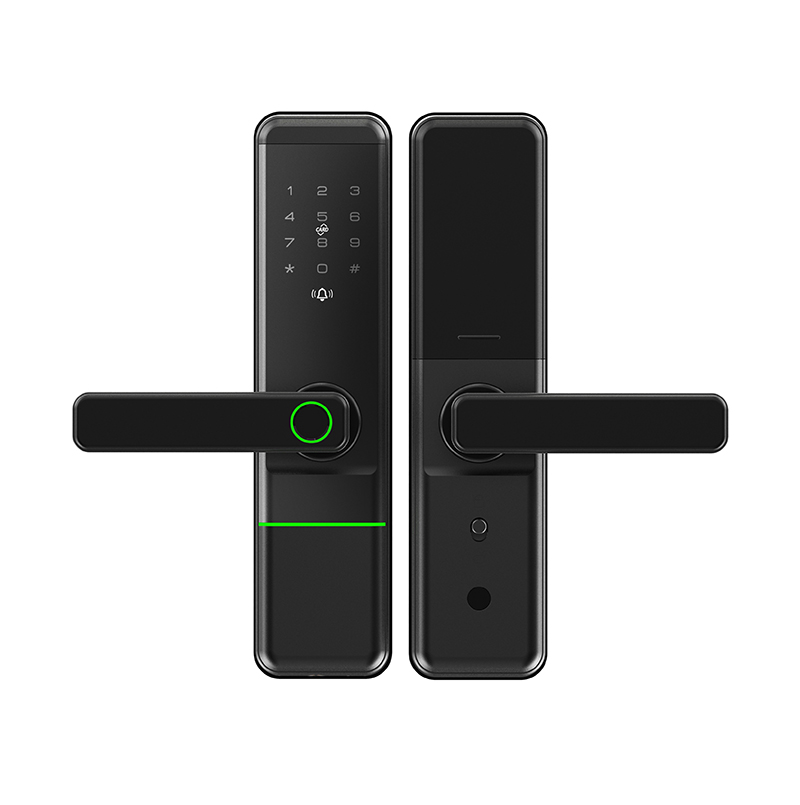
Bluetooth hotel locks can support mobile phone unlocking through a compatible application. They may be suitable for boutique hotels, serviced apartments, and properties seeking a more flexible guest access experience.
For example, compatible TTHotel App hotel lock solutions support Bluetooth unlocking through a mobile phone. Contractors should confirm the required application, lock configuration, and guest access workflow before installation.
Combined RFID and Bluetooth Solutions
Some projects benefit from combining RFID card access with optional Bluetooth unlocking. This provides card-based access while allowing mobile unlocking where needed.
The right choice depends on the actual project requirements. Contractors should confirm which functions are included in the selected model and which are optional, rather than assuming every lock supports all access methods.
5. Check Power Supply and Emergency Access
Electronic hotel door locks need a suitable power arrangement and a clear maintenance procedure.
Many standalone hotel locks operate on batteries, while some networked solutions require additional equipment. Before installation, contractors should confirm:
- Battery type and quantity
- Low-battery warning method
- Battery replacement procedure
- Emergency unlocking method
- Whether additional power or network equipment is required
Battery life depends on usage frequency, lock configuration, battery quality, and operating conditions. Contractors should review the manufacturer’s specifications rather than relying on an unsupported lifespan estimate.
Emergency access is equally important. Confirm the available backup method, such as a mechanical key where the product supports one, and ensure authorized hotel staff understand the procedure.
For large hotel projects, a standardized battery type and clear maintenance instructions can simplify future servicing.
6. Confirm Hotel Management System Compatibility
Hotel door locks should be evaluated as part of the property’s access management workflow.
A lock that supports RFID cards or Bluetooth does not automatically work with every hotel management system or mobile application.
Before purchasing, confirm:
- Which software or application the lock uses
- How guest access credentials are issued and managed
- Whether the solution supports the intended check-in workflow
- Whether additional hardware or software is required
- What configuration and technical support the supplier provides
For hotels considering a TTHotel App Bluetooth solution, contractors should confirm how the lock and application fit the property’s operating process.
A gateway may be required for certain remote access or monitoring functions, depending on the system configuration. However, not every hotel needs these features. Contractors should select additional equipment only when it serves a defined project requirement.
For a standalone hotel lock installation, a simpler configuration may be more cost-effective and easier to maintain.
7. Evaluate Material Quality and Durability
The lock’s material and construction affect its appearance, maintenance needs, and suitability for frequent use.
Common materials include stainless steel, aluminum alloy, and zinc alloy. Each offers different characteristics, and the right option depends on budget, design preferences, and operating conditions.
Stainless steel hotel locks: Often selected for projects prioritizing a durable construction and a professional appearance. Contractors should confirm the actual stainless steel grade instead of assuming every stainless steel lock uses 304 stainless steel.
Aluminum alloy hotel locks: Can offer a balance of weight, design flexibility, appearance, and cost, making them worth considering for projects with specific budget and styling requirements.
Zinc alloy hotel locks: Commonly used for decorative panels and a range of finishes. Overall quality depends on the design, surface treatment, manufacturing process, and internal components.
In addition to material, check handle strength, panel finish, corrosion resistance, lock body quality, and manufacturing consistency.
For high-occupancy hotels, reliable operation and ease of maintenance may be more valuable than appearance alone. Ask the supplier for relevant specifications and quality documentation before making a decision.
8. Check Safety Requirements and Certifications
Hotel door locks must meet the applicable requirements of the project location and building type.
This is particularly important for fire-rated doors, corridor doors, emergency exits, and doors subject to specific building or accessibility regulations.
Before installation, contractors should verify:
- Whether the lock is suitable for the intended door
- Whether the door requires compatible fire-rated hardware
- Whether the locking arrangement complies with local egress requirements
- Which product certifications or test documents are required
- Whether installation affects the door’s fire rating or warranty
A standard hotel room lock should not automatically be assumed suitable for every fire-rated door or emergency exit.
Requirements vary by country and project specification. Contractors should consult local building codes, project consultants, and qualified fire-door professionals where necessary.
Confirming these requirements before procurement helps prevent rejected installations, costly replacements, and project delays.
9. Calculate Total Installation Costs
The cheapest hotel lock is not always the most economical choice for a project.
Total installation cost includes the purchase price, labor, door modifications, additional equipment, testing, and future maintenance.
For example, a low-priced lock that requires extensive drilling or adjustments may cost more overall than a compatible model with a higher unit price.
Contractors should compare:
- Lock purchase price
- Installation labor
- Door modification costs
- Required software or additional hardware
- Testing and commissioning
- Expected maintenance requirements
For large projects, installation consistency is also important. Standardizing lock models where appropriate can simplify installation, spare parts management, staff training, and future maintenance.
Before mass installation, complete a sample installation and test the lock’s mechanical operation, access functions, and compatibility with the door.
Resolving problems at the sample stage is usually easier and less expensive than correcting them after installation across multiple floors.
10. Verify Supplier Support and Delivery Arrangements
A reliable hotel lock supplier should provide more than a product quotation. Contractors need accurate technical information, clear configuration details, and dependable communication throughout the project.
Before placing a bulk order, confirm whether the supplier can provide:
- Product specifications and installation drawings
- Confirmation of lock body and door compatibility
- Samples for installation testing
- Setup and maintenance instructions
- Relevant certifications and technical documents
- Confirmed production lead times and delivery schedules
- Spare parts and after-sales technical support
Contractors should also confirm which accessories are included, which features are optional, and whether different configurations affect pricing or delivery.
For projects with different door types, provide the supplier with the door schedule and technical requirements before production begins.
A sample approval process helps identify compatibility issues early and ensures that the approved model matches the project’s expectations.
Clear communication during procurement makes project execution more predictable and helps contractors manage deadlines and budgets.
Hotel Door Lock Pre-Installation Checklist
Before beginning mass installation, contractors can use the following checklist to confirm the essential requirements.
| Inspection Item | What to Confirm |
|---|---|
| Door structure | Material, thickness, and installation space |
| Lock body | Type, dimensions, and mounting compatibility |
| Opening direction | Correct handing and handle orientation |
| Access method | RFID card, Bluetooth, or combined functions |
| Power supply | Batteries, warnings, and emergency access |
| Software | Application and management system compatibility |
| Material quality | Construction, finish, and relevant specifications |
| Safety compliance | Local requirements and door certifications |
| Installation test | Sample fitting and functional testing |
| Supplier support | Documentation, delivery, and maintenance |
Completing these checks before installation can reduce rework, improve labor efficiency, and help contractors deliver a more reliable hotel access solution.
Conclusion
Before installing hotel door locks, contractors should check door structure, lock body dimensions, opening direction, access methods, power requirements, software compatibility, material quality, safety compliance, installation costs, and supplier support.
For new hotel construction, coordinating lock specifications with the door supplier early can prevent compatibility problems. For hotel renovation projects, choosing a lock that matches the existing door preparation can reduce drilling, labor costs, and disruption to finished interiors.
The best hotel door lock is not necessarily the cheapest product or the one with the most features. It is the solution that fits the door, meets the hotel’s operational needs, supports reliable daily use, and provides an appropriate balance between initial cost and long-term performance.
Shenzhen Zhuo Hengda Technology Co., Ltd. supplies hotel door lock solutions for different project requirements, including RFID card locks and optional Bluetooth App unlocking configurations.
Planning a hotel construction or renovation project? Contact our team to discuss your door specifications, required access functions, and project quantity. We can help you evaluate suitable hotel lock configurations before bulk purchasing.