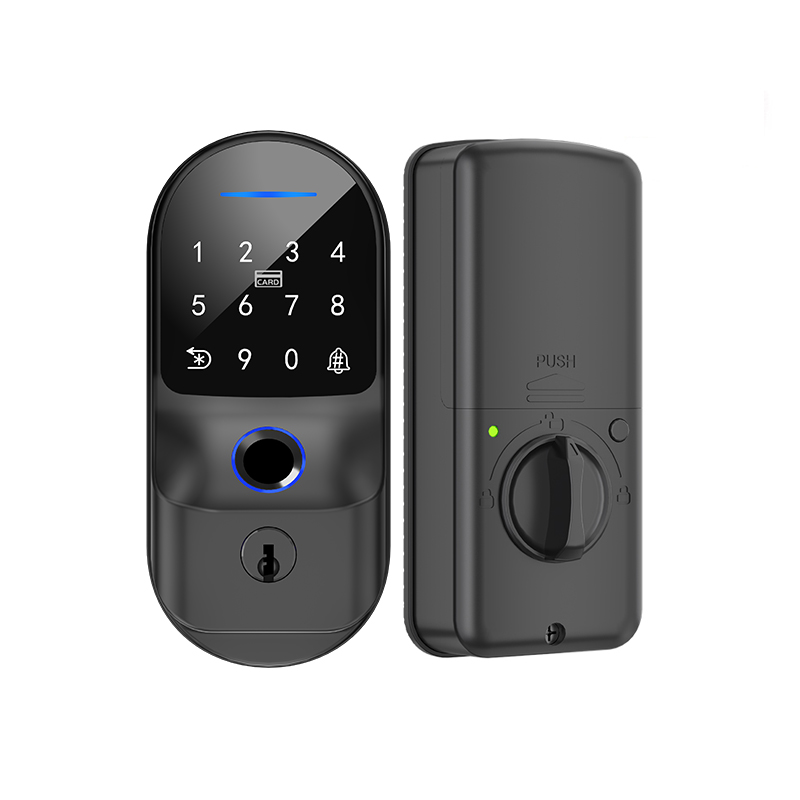
For hotels, door locks are an important part of guest room security, but they can also become a significant project cost—especially when upgrading hundreds of rooms or replacing locks during a hotel renovation.
The good news is that reducing hotel door lock costs does not necessarily mean choosing low-quality locks. With the right product, access technology, material, installation method and supplier, hotels can control the overall project budget while maintaining reliable daily operation.
This guide explains how hotels can reduce door lock costs without sacrificing reliability, with practical strategies for hotel owners, procurement teams, contractors, distributors and hospitality project managers.
1. Choose the Right Hotel Lock for the Project
One of the easiest ways to control hotel door lock costs is to avoid paying for features that the property does not actually need.
A luxury hotel may require a premium smart hotel lock with advanced access control functions. However, a budget hotel, boutique hotel or serviced apartment may only need reliable RFID card access with mechanical key override.
For many properties, an RFID hotel door lock provides a practical balance between cost, convenience and reliability.
When selecting a lock, consider:
- Hotel positioning and room rate
- Number of guest rooms
- Required access method
- Existing door preparation
- Renovation requirements
- Expected service life
- Maintenance requirements
- Future upgrade options
Instead of choosing the most expensive hotel lock available, choose a lock that matches the actual requirements of the property.
This approach can significantly reduce the cost of hotel door lock replacement projects without compromising basic security and reliability.
2. Consider RFID Hotel Locks for Cost-Effective Access
For hotels looking for a reliable and relatively affordable electronic access solution, RFID hotel locks remain a practical choice.
An RFID hotel lock allows guests to unlock their rooms using a key card. The system is simple for hotel staff to manage and does not require every guest to install a mobile application.
For many small and medium-sized hotels, cost-effective RFID hotel door locks can provide the functions needed for daily hotel operations without the higher investment associated with more advanced smart lock systems.
Typical benefits include:
- Key card access
- Simple guest operation
- Centralized hotel management
- Mechanical key emergency access
- Reliable electronic locking
- Easy replacement of traditional hotel locks
- Suitable for new hotel projects and renovations
For hotels that need a dependable access solution while keeping the initial investment under control, RFID can be a sensible option.
3. Don’t Over-Specify Smart Lock Features
Another common reason hotel lock projects become expensive is purchasing unnecessary smart features.
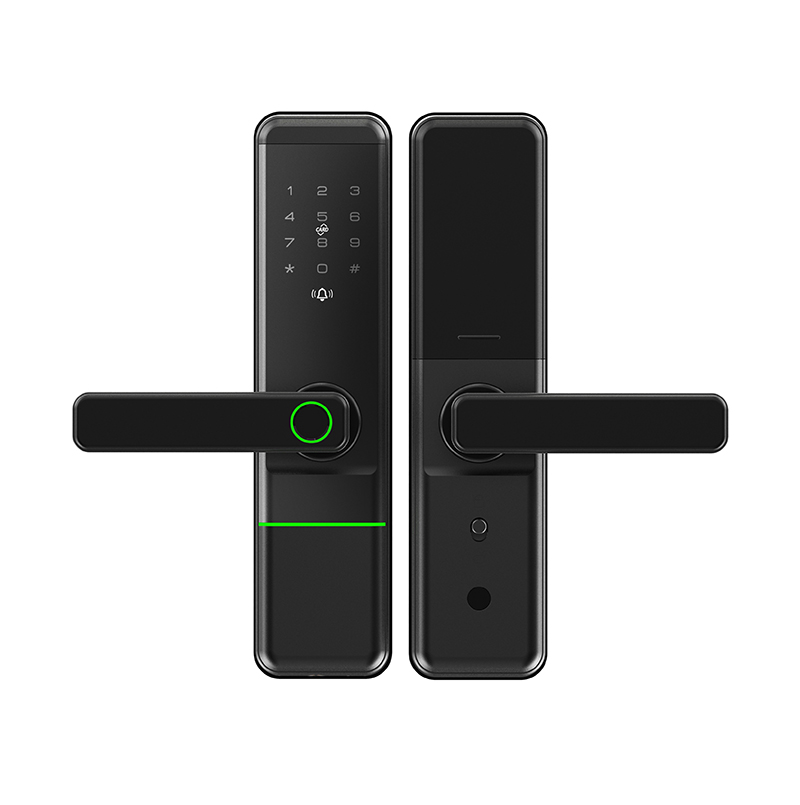
Modern hotel locks can support Bluetooth, mobile apps, remote management, fingerprint recognition, facial recognition and other technologies. These functions can be useful, but not every hotel needs all of them.
For example, a budget hotel may not need facial recognition or remote cloud management. Adding unnecessary functions can increase both the product price and system complexity.
A better approach is to select the hotel door lock features that are actually useful for your property.
For example:
Basic hotel project:
RFID card + mechanical key
Modern hotel project:
RFID card + Bluetooth App + mechanical key
Advanced smart hotel project:
Mobile access + remote management + additional smart functions
A modular approach allows hotels to control their initial investment while keeping room for future upgrades.
4. Choose Bluetooth as an Optional Upgrade
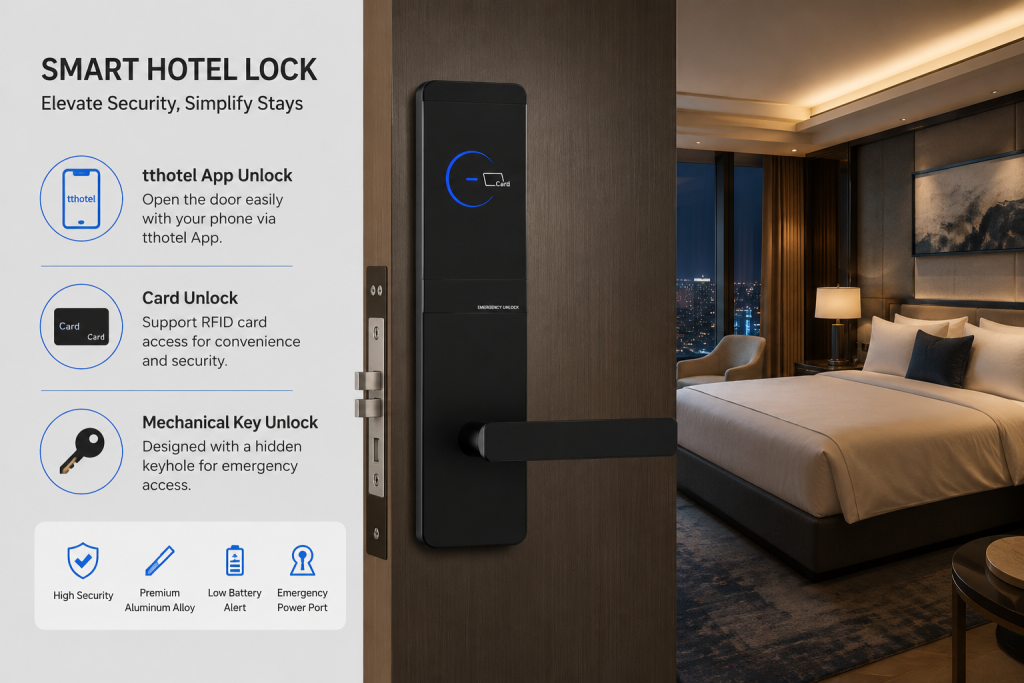
For hotels that want mobile phone access but do not want to invest in a fully advanced smart lock system, Bluetooth can be a practical middle ground.
A Bluetooth hotel lock allows guests to use a smartphone instead of a traditional key card. Depending on the hotel access system, guests can receive digital access through a mobile application.
For example, the TThotel App solution can be used with compatible Bluetooth hotel locks. The hotel manages the system through software, while guests can use their phones for Bluetooth unlocking.
This means hotels can choose:
RFID card access only
or
RFID + Bluetooth App access
rather than purchasing a more expensive smart lock with functions that are not required.
For hotels planning a gradual technology upgrade, an RFID hotel lock with optional Bluetooth App can provide a good balance between project cost and modern guest experience.
5. Pay Attention to the Lock Material
Material selection can also affect hotel door lock costs.
Common hotel lock materials include:
- Stainless steel
- 304 stainless steel
- Aluminum alloy
- Zinc alloy
- Steel
Each material has different characteristics and pricing.
Stainless Steel
Stainless steel hotel locks are widely used because they provide good durability and corrosion resistance.
304 Stainless Steel
304 stainless steel offers higher corrosion resistance and a more premium material specification. It can be a good choice for hotels that prioritize durability and appearance.
Aluminum Alloy
Aluminum alloy hotel locks can provide a modern and attractive appearance while maintaining a competitive price. They are particularly useful for projects where design and budget both matter.
Zinc Alloy
Zinc alloy can offer flexible designs and attractive finishes, although the material positioning and cost can vary depending on the product.
The goal is not simply to choose the cheapest material. Instead, select the hotel lock material that provides the best value for the property’s requirements.
6. Reduce Installation Costs During Hotel Renovation
For renovation projects, the lock price is only part of the total cost.
Installation labor, door modification and replacement work can sometimes become a larger expense than expected.
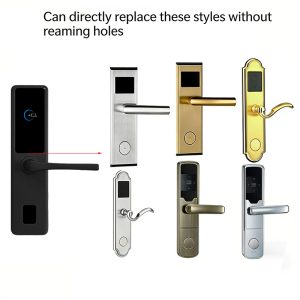
Before purchasing hotel locks, check whether the new lock can work with the existing door preparation.
A suitable hotel door lock replacement solution for renovation projects can reduce:
- Door drilling
- Door modification
- Installation time
- Labor costs
- Room downtime
If an existing hotel lock can be replaced without extensive door modification, the hotel may save considerably across hundreds of rooms.
This is especially important for hotels that are upgrading an existing property rather than constructing a new building.
7. Consider Replacement Hotel Locks for Existing Doors
Hotel renovation projects do not always require completely new doors.
If the existing doors are still in good condition, replacing the old locks may be a more economical option.
A properly designed replacement RFID hotel lock can help modernize guest rooms while keeping the existing doors.
This can be particularly valuable for:
- Hotel renovation projects
- Boutique hotel upgrades
- Budget hotel refurbishment
- Older hotel properties
- Serviced apartment renovations
- Large-scale room upgrades
When comparing suppliers, ask whether the proposed hotel lock is compatible with your existing door and lock preparation.
A lower-cost lock is not necessarily the most economical solution if it requires extensive door modification.
8. Compare Total Project Cost, Not Just Unit Price
One of the biggest mistakes in hotel lock purchasing is comparing suppliers only by the price of one lock.
The actual project cost may include:
Lock price + software + cards + installation + door modification + shipping + maintenance + replacement parts
A slightly more expensive hotel lock may actually cost less overall if it is easier to install, more durable and requires less maintenance.
For example, if a low-priced lock requires significant door modification, the installation cost can quickly eliminate the initial price advantage.
Therefore, hotel procurement teams should compare the total cost of ownership of hotel door locks, not just the factory unit price.
9. Choose a Reliable Hotel Lock Manufacturer
The supplier can have a major impact on long-term hotel lock costs.
A reliable hotel lock manufacturer should be able to provide:
- Stable product quality
- Consistent production
- Spare parts
- Technical support
- Installation guidance
- Software support when required
- Customization options
- Long-term after-sales service
For distributors and hotel contractors, supplier stability is particularly important because a hotel may need replacement parts several years after installation.
A very low purchase price is not necessarily a good deal if replacement parts are difficult to obtain or technical support is unavailable.
When evaluating a hotel door lock manufacturer for bulk purchasing, consider both the initial price and long-term service capability.
10. Purchase Hotel Locks in the Right Quantity
For large hotel projects, purchasing in bulk can help control the average unit cost.
However, hotels should first confirm the exact lock specification before placing a large order.
Important details include:
- Door thickness
- Lock body dimensions
- Door handing
- Lock body type
- RFID technology
- Bluetooth requirements
- Finish
- Emergency unlocking method
- Software requirements
- Installation accessories
A small specification mistake can become expensive when hundreds of locks are involved.
For this reason, it is recommended to test samples on actual hotel doors before confirming a large production order.
11. Standardize the Lock Model Across the Property
Using too many different hotel lock models can increase management and maintenance costs.
If possible, hotels can standardize the same lock model or lock platform across multiple rooms.
This can simplify:
- Staff training
- Installation
- Maintenance
- Spare parts management
- Replacement
- Procurement
For hotel groups and multi-property operators, standardization can also make future purchasing easier.
A standardized RFID hotel lock system for multiple hotel rooms can therefore provide cost advantages beyond the initial purchase.
12. Don’t Sacrifice Reliability to Save a Small Amount
Reducing costs does not mean choosing the cheapest possible hotel lock.
A hotel door lock is used many times every day. Guests, housekeeping staff, maintenance teams and hotel employees all rely on it.
A lock that fails frequently can result in:
- Guest complaints
- Emergency maintenance
- Room downtime
- Replacement costs
- Negative guest experiences
Therefore, hotels should focus on cost-effective hotel door locks with reliable daily performance, rather than simply looking for the lowest unit price.
A good hotel lock should balance:
Price + durability + functionality + installation efficiency + after-sales support
This is the foundation of long-term value.
13. A Practical Cost-Saving Strategy for Different Hotels
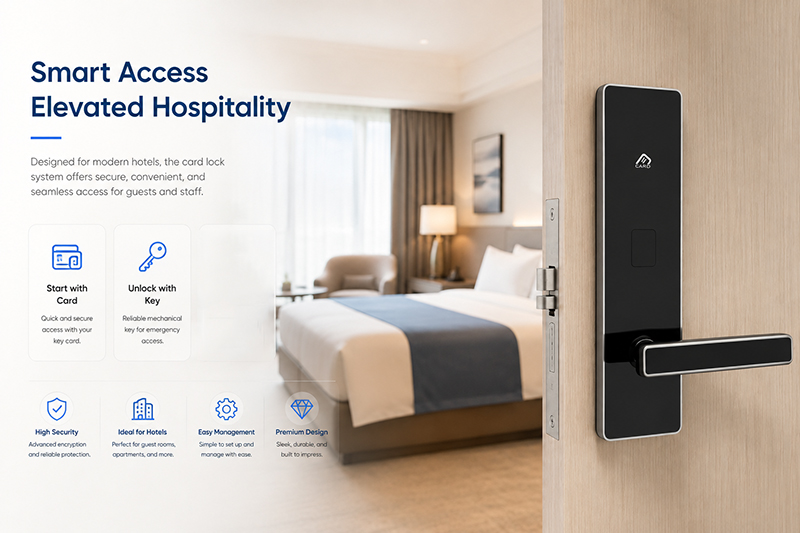
Different hotel types can use different strategies to control door lock costs.
Budget Hotels
Focus on:
- Affordable RFID hotel locks
- Durable materials
- Essential access functions
- Simple installation
- Low maintenance requirements
Boutique Hotels
Focus on:
- Attractive lock design
- RFID access
- Optional Bluetooth App
- Competitive pricing
- Matching the hotel’s interior design
Business Hotels
Focus on:
- Reliable daily operation
- RFID access
- Optional mobile access
- Durable materials
- Efficient hotel management
Hotel Renovation Projects
Focus on:
- Compatibility with existing doors
- Minimal door modification
- Fast installation
- Replacement efficiency
- Long-term spare parts availability
Hotel Distributors and Contractors
Focus on:
- Stable manufacturer supply
- Bulk pricing
- Product consistency
- Technical support
- Spare parts availability
- Flexible product configurations
What Is the Most Cost-Effective Hotel Door Lock Strategy?
For many hotels, the most cost-effective strategy is not to choose the cheapest lock. It is to choose a reliable hotel door lock that matches the property’s actual requirements.
A practical approach is:
- Select the appropriate hotel lock type.
- Use RFID access when card access is sufficient.
- Add Bluetooth App access only when mobile unlocking is needed.
- Choose the appropriate material according to the project budget.
- Check compatibility with existing doors.
- Reduce unnecessary door modification.
- Compare total project costs rather than unit prices.
- Work with a reliable hotel lock manufacturer.
- Standardize products where possible.
- Test samples before bulk production.
This approach can help hotels reduce hotel door lock replacement costs, control renovation budgets and maintain reliable room access.
Final Thoughts
Hotels do not have to choose between low cost and reliable hotel door locks.
The key is to control the right costs instead of simply choosing the cheapest product.
For new hotel construction and renovation projects, an appropriately configured RFID hotel lock can provide reliable card access at a competitive cost. Hotels that want mobile access can also consider an RFID hotel lock with optional Bluetooth App, such as a TThotel solution.
Material selection, door compatibility, installation requirements, supplier reliability and total ownership cost should all be considered before making a purchasing decision.
For hotel owners, contractors, distributors and procurement teams, the best hotel lock is ultimately the one that provides reliable performance, suitable features and long-term project value within the available budget.